Monday, 5 February 2024

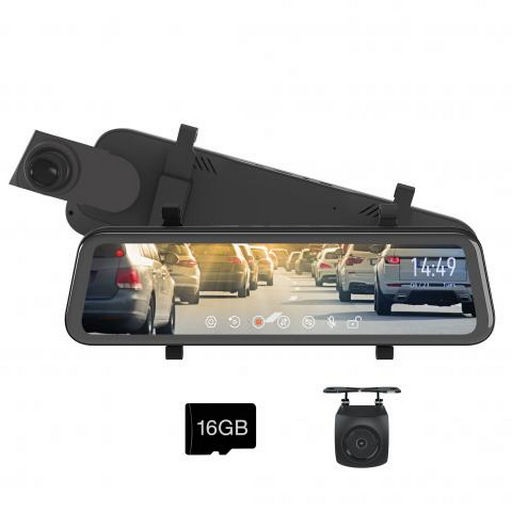
WOLFBOX G840S 12 4K Mirror Dash Cam Review

As a tech-savvy driver, I’m always on the lookout for the latest gadgets that can enhance my time on the road. Recently, I stumbled upon the WOLFBOX G840S 12 4K Mirror Dash Cam, and let me say, it’s been quite a game-changer.

With its impressive 4K UHD resolution, spacious 12-inch screen, and advanced night vision capabilities, this dash cam seems to have it all. But does it live up to the hype? In this review, I’ll be diving into the pros and cons of the WOLFBOX G840S, sharing customer feedback, and providing my own personal long-term use and warranty experience.

So, without further ado, let’s see if this mirror dash cam is truly worth the investment.

Key Takeaways

  • Upgraded 4K UHD resolution for front and rear cameras
  • Large 12-inch screen with a broad view
  • Clear image and enhanced night vision
  • GPS tracking for real-time location information

Product Specifications

The Wolfbox G840S 12 4K Mirror Dash Cam boasts a range of impressive product specifications that make it a top contender in the market. With upgraded 4K UHD resolution for both front and rear cameras, you can capture clear and high-quality images.

The 12-inch larger screen provides a broad view, making it easy to navigate and view recordings. The enhanced night vision ensures clear images even in low light conditions. The GPS tracking feature allows for real-time location information. The 24-hour precise parking monitor provides added security. The USB C power supply ensures stability. The device’s additional smart functions like streaming media rearview and adjustable display view angle enhance the user experience.

Detailed Features

Moving on to the features of the Wolfbox G840S 12 4K Mirror Dash Cam, let’s explore the functionalities that make it a standout choice for users. This dash cam boasts an upgraded 4K UHD resolution for both front and rear cameras, ensuring clear and high-quality footage.

The 12-inch larger screen provides a broad view, making it easier to navigate and view recordings. The dash cam also offers clear image and enhanced night vision capabilities, ensuring optimal visibility in any lighting condition. Additionally, it features GPS tracking for real-time location information and a 24-hour precise parking monitor for added security. The USB C power supply ensures stability, and the dash cam comes with additional smart functions like streaming media rearview and adjustable display view angle.

Pros and Cons

After considering the detailed features, let’s now examine the pros and cons of the Wolfbox G840S 12 4K Mirror Dash Cam.

Pros

The installation process is quick and easy, making it convenient for users. The large screen provides easy navigation and clear viewing of recordings. Additionally, the dash cam comes with a 32GB Mini SD Card, eliminating the need for separate purchases. The customer service is responsive and helpful, promptly addressing any issues.

Cons

On the downside, some users have reported firmware and speed warning setting issues. There’s also a lack of automatic brightness adjustments, which can be inconvenient in varying lighting conditions. Some users have experienced glare issues with the mirror. Lastly, the GV Player software has a learning curve, which may require some time to get used to.

Final Thoughts

Now that we’ve examined the pros and cons of the Wolfbox G840S 12 4K Mirror Dash Cam, it’s time to share my final thoughts on this product. Overall, the Wolfbox G840S offers impressive features such as upgraded 4K resolution, a larger 12-inch screen, and enhanced night vision. The installation process is quick and easy, and the customer service is responsive and helpful.

However, there are a few drawbacks to consider. Some users have experienced issues with the firmware and speed warning settings, as well as the lack of automatic brightness adjustments. Plus, there have been complaints about glare on the mirror and a learning curve with the GV Player software. Despite these minor flaws, the Wolfbox G840S is a reliable dash cam that provides clear video quality and long-term functionality.

To sum up my thoughts on the Wolfbox G840S 12 4K Mirror Dash Cam, it’s a reliable and feature-packed device that offers clear video quality and long-term functionality. The upgraded 4K UHD resolution for both front and rear cameras provides sharp and detailed footage.

The 12-inch larger screen offers a broad view, making it easy to navigate and view recordings. The inclusion of GPS tracking allows for real-time location information, while the 24-hour precise parking monitor ensures constant surveillance. The device also comes with additional smart functions like streaming media rearview and adjustable display view angles.

Although there were some minor issues mentioned by customers, such as firmware and speed warning setting issues, overall, the Wolfbox G840S is a solid choice for anyone looking for a reliable and high-quality mirror dash cam.

Frequently Asked Questions

Can the WOLFBOX G840S 12 4K Mirror Dash Cam Be Hardwired Into the Vehicle?

Yes, the WOLFBOX G840S 12 4K Mirror Dash Cam can be hardwired into the vehicle for a more permanent installation. It provides stability and eliminates the need for a separate power source.

Does the WOLFBOX G840S 12 4K Mirror Dash Cam Have Built-In Wi-Fi for Easy Connectivity?

No, the WOLFBOX G840S 12 4K Mirror Dash Cam does not have built-in Wi-Fi for easy connectivity.

What Is the Warranty Period for the WOLFBOX G840S 12 4K Mirror Dash Cam?

The warranty period for the WOLFBOX G840S 12 4K Mirror Dash Cam is not explicitly mentioned in the provided information. It would be best to refer to the manufacturer’s website or contact their customer service for specific warranty details.

Can the WOLFBOX G840S 12 4K Mirror Dash Cam Be Used in Extreme Weather Conditions?

Yes, the WOLFBOX G840S 12 4K Mirror Dash Cam can be used in extreme weather conditions. Its durable construction and waterproof design ensure reliable performance in various weather conditions, providing peace of mind while driving.

Conclusion

Overall, the WOLFBOX G840S 12 4K Mirror Dash Cam is a game-changer for any tech-savvy driver. With its impressive 4K resolution, large screen, and GPS tracking feature, it provides a comprehensive and user-friendly experience.

The added smart functions and adjustable display view angles enhance the overall driving experience. While there may be some minor cons, the pros definitely outweigh them. In conclusion, the WOLFBOX G840S is a must-have gadget for anyone looking to enhance their driving experience.

Related Articles

Be sure to also check out these articles right here at Motion Performance Motorsports

The Complete Buyers Guide for Backup Cameras

Next Backup Camera Review: LeeKooLuu LK3 Backup Camera Review: Clear Image & Easy Installation

Previous backup Camera Review: The 4 Best Backup Camera Kits for Enhanced Safety and Convenience


from
https://motionperformancemotorsports.com/backup-cameras/backup-camera-reviews/wolfbox-g840s-12-4k-mirror-dash-cam-review/

The 4 Best Backup Camera Kits for Enhanced Safety and Convenience

Are you tired of the anxiety that comes with parking your car in tight spaces or reversing with limited visibility? Imagine having a backup camera kit that not only enhances your safety but also provides you with convenience.

Well, look no further because we have compiled a list of the four best backup camera kits that will meet your needs. From the WOLFBOX G840S 12 4K Mirror Dash Cam Backup Camera to the Mirror Dash Cam with Night Vision and Full Touch Screen, these kits offer a range of features that will surely impress.

But which one is the best fit for you? Stay tuned as we explore each kit in detail and help you make an informed decision.

Key Takeaways

  • The WOLFBOX G840S 12 4K Mirror Dash Cam Backup Camera offers a large 12-inch screen with a smart screen split function for improved visibility.
  • The LeeKooLuu Backup Camera with Monitor Kit (LK3) features a 4.3-inch LCD monitor with adjustable settings for personalized viewing.
  • The DoHonest Wireless Backup Camera Magnetic with Solar Power (V35) includes a 5-inch display with a bright and clear LCD screen for easy monitoring.
  • The Mirror Dash Cam with Night Vision and Full Touch Screen (10 Meters Cable) provides a 10-inch IPS streaming media full touch screen for enhanced convenience.

WOLFBOX G840S 12 4K Mirror Dash Cam Backup Camera (Free 32GB Card & GPS)

high definition mirror dash cam

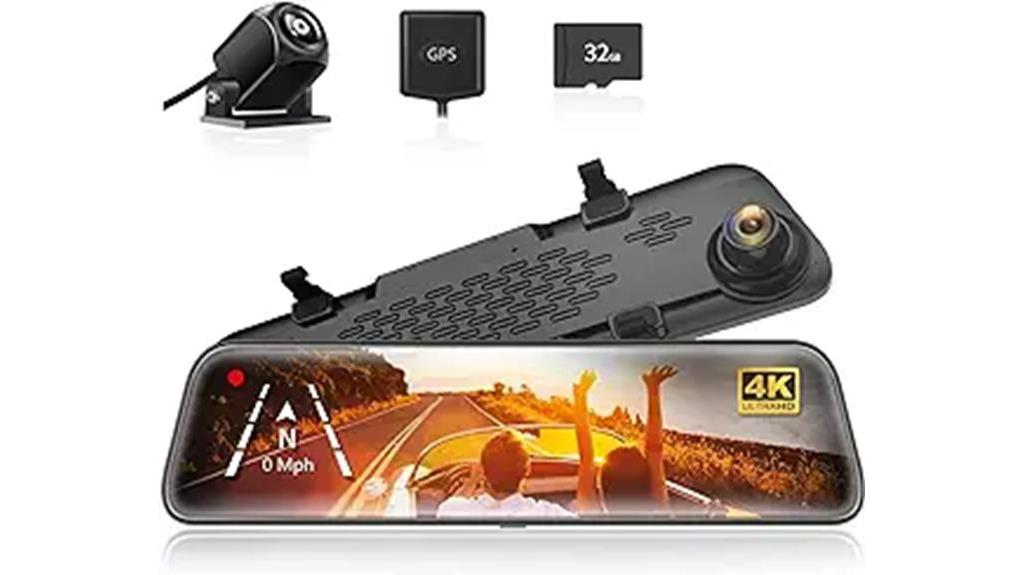
If you’re looking for a backup camera kit that offers enhanced safety and convenience, the WOLFBOX G840S 12 4K Mirror Dash Cam Backup Camera (Free 32GB Card & GPS) is an excellent choice. With upgraded 4K UHD resolution for both front and rear cameras, you can expect clear and high-quality images. The 12′ larger screen with smart screen split function allows you to view both camera feeds simultaneously.

Additionally, the GPS tracking feature, along with the external GPS antenna, ensures accurate location tracking. The 24H precise parking monitor provides continuous surveillance, and the USB C power supply offers convenience and reliability. With other smart functions such as streaming media rearview and mirror flip of the rear image, this backup camera kit offers a comprehensive solution for your safety and convenience needs.

Best For: Users looking for a high-quality backup camera kit with 4K UHD resolution, GPS tracking, and smart functions.

Pros:

  • Upgraded 4K UHD resolution for clear and high-quality images
  • 12′ larger screen with smart screen split function for simultaneous viewing of both camera feeds
  • GPS tracking with external GPS antenna for accurate location tracking

Cons:

  • Possible glare issue with the mirror, especially in overcast conditions

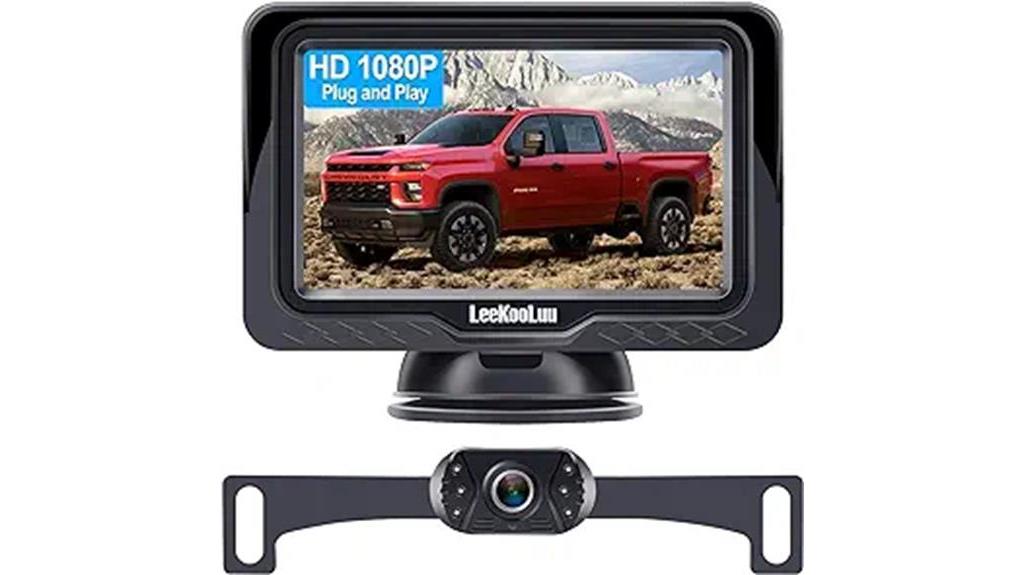
LeeKooLuu Backup Camera with Monitor Kit (LK3)

leekooluu backup camera kit

For those seeking a reliable and user-friendly backup camera kit, the LeeKooLuu Backup Camera with Monitor Kit (LK3) offers an array of features for enhanced safety and convenience.

This kit provides a plug and play installation, making it easy to set up and adjust. The HD 1080P image ensures clear visibility, while the stable signal transmission ensures a consistent connection. The camera is IP69 waterproof and high-temperature resistant, ensuring durability in various weather conditions. The DIY parking grid lines and image flip feature allows for customizable parking assistance.

The 4.3 inch LCD monitor comes with adjustable brightness, contrast, and color settings. Users have praised the ease of installation and operation, as well as the good image quality and visibility.

With its competitive price and comprehensive features, the LeeKooLuu Backup Camera with Monitor Kit (LK3) offers great value for the price.

Best For: Those looking for an affordable and easy-to-install backup camera kit with customizable parking assistance and good image quality.

Pros:

  • Plug and play installation for ease of setup
  • HD 1080P image for clear visibility
  • Adjustable parking grid lines and image flip feature for personalized parking assistance

Cons:

  • Some challenges with finding and connecting the wires to the reverse light

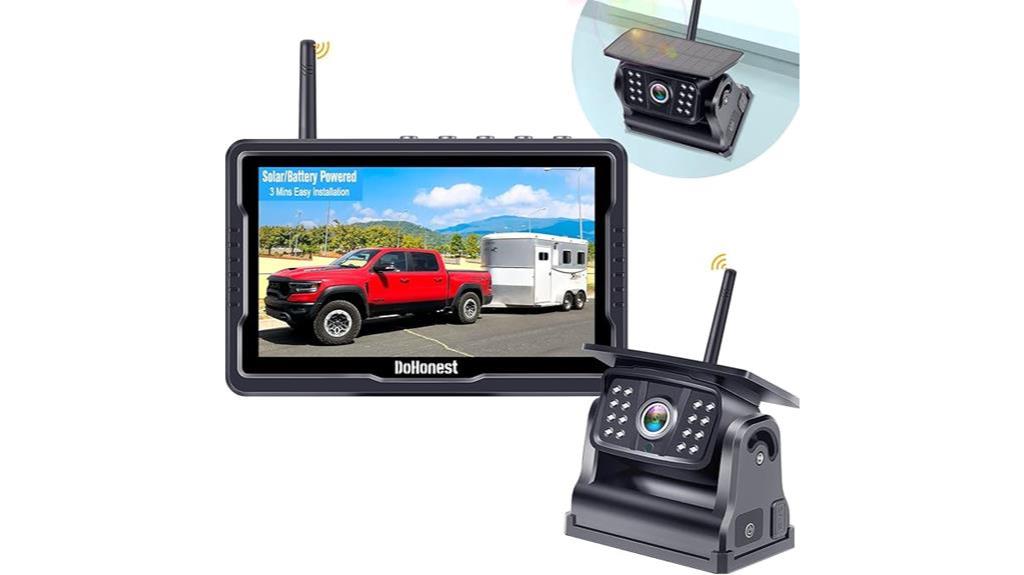
DoHonest Wireless Backup Camera Magnetic with Solar Power (V35)

solar powered wireless backup camera

The DoHonest Wireless Backup Camera Magnetic with Solar Power (V35) offers a strong, stable signal and easy installation, making it the ideal choice for those seeking enhanced safety and convenience in their backup camera kit.

This backup camera kit features a magnetic base, allowing for a quick and hassle-free installation process. With its rechargeable battery, you can enjoy a long working time without the need for constant recharging. The camera also provides a strong and stable signal with a digital wireless range of up to 36ft. Additionally, the DoHonest Wireless Backup Camera Magnetic (V35) offers HD 1080P image quality and super night vision, ensuring a clear view even in low-light conditions. With its 5-inch display, you have multiple options for placement.

Overall, this backup camera kit provides a reliable and user-friendly solution for enhancing safety and convenience while backing up.

Best For: Individuals looking for a convenient and easy-to-install backup camera kit with a strong and stable signal.

Pros:

  • Quick and hassle-free installation with a strong magnetic base.
  • Rechargeable battery with long working time, eliminating the need for constant recharging.
  • HD 1080P image quality and super night vision for clear visibility in low-light conditions.

Cons:

  • Limited to a 36ft digital wireless range.

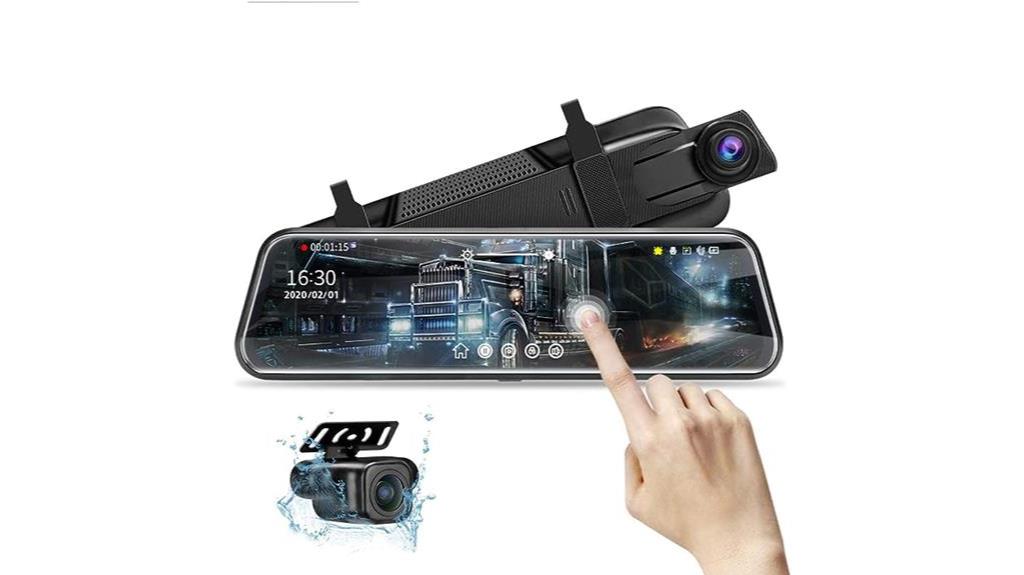
Mirror Dash Cam with Night Vision and Full Touch Screen (10 Meters Cable)

night vision mirror dash cam

With its dual 1080P front and rear cameras, 10-inch IPS streaming media full touch screen, and super night vision, the Mirror Dash Cam with Night Vision and Full Touch Screen (10 Meters Cable) ensures enhanced safety and convenience for drivers. This dash cam offers clear video and captures license plates from a distance, thanks to its wide-angle lens that reduces blind spots and captures details on the road. The touch screen controls make it easy to operate, and it functions as both a rear and front dash cam. Users have reported that it works well during light to moderate rain, but may be affected during heavy rain.

Overall, customers have praised its performance, installation, and usage, with some minor drawbacks mentioned. The Mirror Dash Cam with Night Vision and Full Touch Screen (10 Meters Cable) is a reliable choice for drivers seeking advanced safety features.

Best For: Drivers who prioritize enhanced safety features and convenience in their vehicles.

Pros:

  • Dual 1080P front and rear cameras with wide-angle lens reduce blind spots and capture clear video
  • 10-inch IPS streaming media full touch screen for easy operation
  • Super night vision and parking assistance for enhanced safety

Cons:

  • May be affected during heavy rain

Factors to Consider When Choosing Backup Camera Kits

When choosing a backup camera kit, there are several key considerations to keep in mind. First, think about the installation options available, such as wireless or wired setups. Next, consider the image quality factors, like resolution and viewing angle, to ensure clear visibility. And also remember, night vision capabilities and display features, such as screen size and brightness, are important aspects to consider for optimal convenience and safety.

Key Considerations

Consider the resolution and image quality of backup camera kits, such as HD or 4K, for clear visibility. Higher resolution cameras provide sharper images, making it easier to see obstacles and objects behind your vehicle.

Look for kits that offer features like night vision and parking assistance, as these can greatly enhance safety and convenience. Night vision allows you to see clearly even in low light conditions, while parking assistance provides guidelines or sensors to help you park accurately.

Evaluate the installation process, ensuring that the kit is compatible with your vehicle and that the wiring isn’t too complicated. Also, check for additional features like adjustable display settings, loop recording, and parking monitor functions.

Installation Options

To choose the right backup camera kit, you need to evaluate the type of installation required and consider factors such as mounting options and power source. First, determine whether you prefer a wired or wireless installation. Wired kits require running cables from the camera to the display unit, while wireless kits transmit the signal wirelessly.

Next, evaluate the ease of installation and whether any specific tools or skills are necessary. Look for mounting options that suit your preferences, such as dash, windshield, or tailgate mounting. Consider the power source required for the camera, whether it’s connected to the reverse light, 12V fuse box, or uses a rechargeable battery.

Lastly, check if the kit includes detailed instructions or video guides to assist you during the installation process.

Image Quality Factors

For clear and detailed visuals, prioritize image quality when choosing a backup camera kit. High resolution is crucial in capturing better image clarity. Look for cameras with 4K UHD or 1080P resolution for more detailed visuals. Additionally, consider backup camera kits with enhanced night vision capabilities to ensure visibility in low-light conditions. These cameras use advanced technology to capture clear images even in the dark.

Wide-angle lenses are also important as they help reduce blind spots and capture more details in the image. Lastly, features like adjustable brightness, contrast, and color contribute to better image quality by allowing you to customize the visuals according to your preferences.

Night Vision Capabilities

When selecting a backup camera kit, one important factor to consider is the night vision capabilities. This ensures clear and enhanced visibility in low light or dark conditions. Having a backup camera with reliable night vision technology is crucial for safe and convenient driving, especially during nighttime or in areas with poor lighting.

The use of super night vision technology provides high-quality images and improved visibility. This allows you to clearly see obstacles and hazards that may be difficult to detect with the naked eye. Advanced night vision features ensure that the camera captures clear and detailed images even in low-light environments. This allows for effective monitoring of surroundings and capturing of clear footage during nighttime use.

With enhanced night vision functionality, you can rely on your backup camera to provide reliable performance and clear imaging. This gives you peace of mind while maneuvering your vehicle in low-light or dark environments.

Display Features

Consider the display features carefully when choosing a backup camera kit for your vehicle.

The WOLFBOX G840S 12 4K Mirror Dash Cam Backup Camera offers a 12-inch large screen with a smart screen split function, allowing you to view multiple camera angles simultaneously.

The LeeKooLuu Backup Camera with Monitor Kit (LK3) provides a 4.3-inch LCD monitor with adjustable brightness, contrast, and color for optimal display customization.

The DoHonest Wireless Backup Camera Magnetic with Solar Power (V35) boasts a 5-inch display with a bright and clear LCD screen, offering multiple placement options for your convenience.

Finally, the Mirror Dash Cam with Night Vision and Full Touch Screen (10 Meters Cable) features a 10-inch IPS streaming media full touch screen, ensuring a high-quality and user-friendly display.

Choose the backup camera kit with display features that suit your preferences and needs.

Wireless Vs Wired

To determine the best backup camera kit for your vehicle, take into account the key factors of wireless versus wired systems. Wired backup camera kits require physical connections for power and transmission, while wireless kits rely on signals for communication.

Wired systems offer more stable and consistent signal transmission compared to wireless setups. However, installation of wired kits involves routing and connecting cables from the rear of the vehicle to the display unit, making it a more labor-intensive process.

On the other hand, wireless kits are easier to set up due to no wiring requirements. Wired backup camera kits may be more suitable for larger vehicles or those with complex setups, while wireless kits are often preferred for simpler installations.

And, wired systems are less susceptible to interference and signal loss, making them a reliable choice for a consistent video feed.

Warranty and Support

If you’re looking for a backup camera kit that offers peace of mind and reliable support, one important factor to consider is the warranty and support provided. Check the duration of the warranty, including whether it covers parts and labor.

It’s also crucial to look for information on the customer support offered for troubleshooting and technical assistance. Verify if the warranty requires product registration and if it’s transferable in case of resale. Additionally, consider the availability of extended warranty options for additional protection.

Research the process for warranty claims and whether there are service centers available for repairs.

Frequently Asked Questions

How Long Does the Battery Last on the Dohonest Wireless Backup Camera Magnetic With Solar Power (V35)?

The battery on the Dohonest wireless backup camera magnetic with solar power (V35) lasts for a long time. You won’t have to worry about constantly recharging it because it gets power from the sun.

Can the Mirror Dash Cam With Night Vision and Full Touch Screen (10 Meters Cable) Be Easily Installed on Any Type of Vehicle?

Yes, the mirror dash cam with night vision and full touch screen (10 meters cable) can be easily installed on any type of vehicle. It provides enhanced safety and convenience for your driving experience.

What Is the Warranty Period for the WOLFBOX G840S 12 4K Mirror Dash Cam Backup Camera?

The warranty period for the Wolfbox G840S 12 4K mirror dash cam backup camera is not specified without the context of The 4 Best Backup Camera Kits for Enhanced Safety and Convenience.

Does the Leekooluu Backup Camera With Monitor Kit (Lk3) Have Adjustable Viewing Angles?

Yes, the Leekooluu backup camera with monitor kit (LK3) does have adjustable viewing angles. You can easily adjust the camera to get the perfect view of what’s behind your vehicle.

Are There Any Additional Features or Functions in the Mirror Dash Cam With Night Vision and Full Touch Screen (10 Meters Cable) That Enhance Convenience and Safety?

Yes, the mirror dash cam with night vision and full touch screen (10 meters cable) has additional features and functions that enhance convenience and safety, such as adjustable viewing angles and enhanced visibility in low-light conditions.

Final Thoughts

When it comes to ensuring enhanced safety and convenience, the WOLFBOX G840S 12 4K Mirror Dash Cam Backup Camera, LeeKooLuu Backup Camera with Monitor Kit, DoHonest Wireless Backup Camera Magnetic with Solar Power, and Mirror Dash Cam with Night Vision and Full Touch Screen are among the best backup camera kits to consider.

These kits offer features such as GPS, solar power, and night vision, providing drivers with reliable and convenient options for safe reversing.

Related Articles

Be sure to also check out these articles right here at Motion Performance Motorsports

The Complete Buyers Guide for Backup Cameras

Next Backup Camera Review:

Previous backup Camera Review:


from
https://motionperformancemotorsports.com/backup-cameras/backup-camera-reviews/best-backup-camera-kits/

Sunday, 17 December 2023

How to Use the Guide Lines on Your Reverse Camera

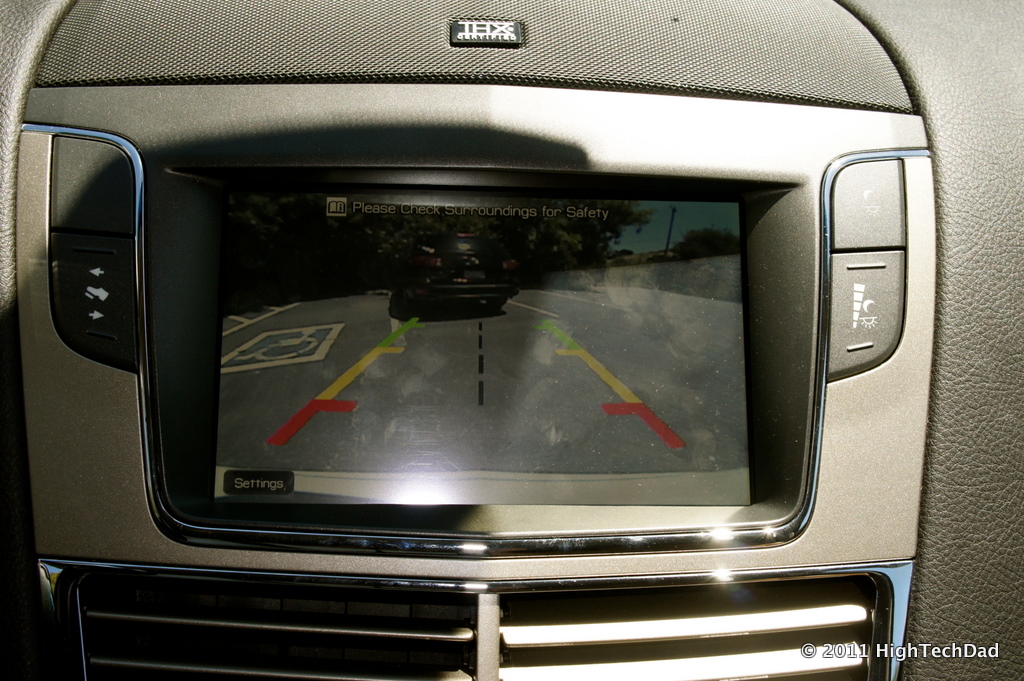
Just as you’re about to reverse into a tight spot, you notice the guide lines on your reverse camera. These on-screen markers are your best friends for parking with precision. They show you where your car’s edges line up, helping you squeeze into those tricky spaces without a scratch.

To use them effectively, align the center line with your intended path and use the colored markers to gauge distance from objects behind you. As you back up, steer so that the guide lines remain parallel to the parking space boundaries. With a bit of practice, you’ll be maneuvering around obstacles and perfecting your parallel parking in no time.

Remember, these lines adjust as you turn the wheel, giving you real-time feedback to adapt your approach for different vehicles and parking scenarios.

Key Takeaways

  • Reverse camera lines serve as guides for distance and trajectory when backing up.
  • The red line indicates the ‘no-go’ zone, about a foot from the bumper.
  • The yellow lines mark a buffer zone, one to two feet away.
  • The green lines indicate more room, typically three feet or more.

Understanding Reverse Camera Lines

Every reverse camera features colored lines on the display that serve as your guide for distance and trajectory when backing up your vehicle. You’ll typically see three colors: red, yellow, and green. They’re not just for show; they’re your key to safe and precise reversing.

The red line represents the “no-go” zone, usually about a foot from your bumper. If an object’s in that zone, you’re too close for comfort. Stop and reassess your surroundings. The yellow lines signal caution, marking one to two feet away. This is your buffer zone. Finally, the green lines indicate you’ve got more room, typically up to three feet or more.

You’ve also got the centerline, that straight line in the middle. It shows where your vehicle’s heading, assuming your wheels are straight. Use it to align with parking spots or to judge your distance from objects directly behind you.

Aligning Your Vehicle Properly

Transitioning from understanding the color-coded guide lines, you’ll now learn how to align your vehicle accurately using your reverse camera. As you begin to reverse, focus on the central line displayed on your screen. This line represents the trajectory of your car. To maintain the correct path, ensure this line aligns with the center of your parking spot or the road behind you.

Next, take note of the horizontal lines. They indicate distances from objects, with the closest line often being a safe distance to stop. You should adjust your steering wheel gradually, keeping an eye on how the guide lines shift in response to your movements. If you’re parking, align the lines with the boundaries of the space.

backup cameras for pickup trucks

Remember, the width of the guide lines generally matches the width of your vehicle. Use this to judge the distance between your car and nearby obstacles or vehicles. If the lines are edging too close to something, it’s a cue to correct your alignment by steering away.

Estimating Distances Accurately

You’ve got your vehicle lined up, but how do you know if you’re too close to an object or about to bump into something? That’s where understanding those colored guide lines on your reverse camera comes into play.

They’re your best bet for gauging distance accurately, so let’s get you comfortable with interpreting what they mean.

Understanding Guide Lines

To accurately estimate distances while reversing, it’s essential to understand the colored guide lines displayed on your reverse camera screen. These lines represent different distance intervals from your vehicle. Generally, the colors indicate how close you’re to an object: red signals immediate proximity, often a foot or less; yellow suggests caution, marking a zone a few feet away; and green denotes a safe distance, typically several feet from your bumper.

As you reverse, watch how stationary objects pass through these color zones. This visual cue helps you gauge how much room you have to maneuver. Remember, these lines are guidelines and may vary by vehicle model, so it’s crucial to get familiar with the specific distances they represent in your car.

With practice, you’ll reverse with confidence, knowing exactly how much space you have.

Practice Reversing Maneuvers

Before attempting to park or navigate tight spaces, it’s crucial to practice estimating distances using your reverse camera’s guide lines to enhance your spatial awareness. Start by reversing into a clear area with no obstacles. Notice how objects move in relation to the guide lines as you back up.

You’ll want to get a feel for how far things are when they’re between lines or when they begin to appear. Try placing cones or markers at different distances, and as you reverse, learn to gauge when to stop or turn. Remember, the camera’s perspective can be deceiving—objects in the screen are usually closer than they appear.

With consistent practice, you’ll better judge distances and make reversing maneuvers second nature.

Maneuvering Around Obstacles

When dealing with obstacles behind your vehicle, rely on your reverse camera’s guidelines to gauge distance and navigate safely. These colored lines on the screen aren’t just for show; they’re your best tool for judging how close you’re to objects that you can’t see over your shoulder.

backup cameras for cars wireless

The farthest colored lines typically indicate a safe zone. If an obstacle falls within this area, you’ve got room to back up without worry. As you reverse and the object moves closer to the middle lines, it’s time to slow down and prepare to stop or adjust your path. The nearest lines to your car are your last warning – anything crossing them is too close for comfort.

Now, when you’re actively maneuvering around an obstacle, use the lines to guide your trajectory. Start with small steering adjustments. If you turn the wheel too much, the guidelines curve, showing you the new path your car will take. Use these curves to wrap around the obstacle smoothly.

Perfecting Parallel Parking

Now that you’ve got the hang of maneuvering around obstacles, let’s tackle parallel parking with your reverse camera’s guide lines.

You’ll need to align your car with these lines, accurately estimate the distance from other vehicles, and master your steering technique.

Aligning With Lines

Master parallel parking by aligning your vehicle with the dynamic guide lines on your reverse camera to ensure a perfect fit between parked cars. As you approach a potential space, shift into reverse and trust your camera to kick in. The guide lines will appear, showing your car’s trajectory. Use them to gauge distance from the curb and surrounding vehicles.

Now, while reversing, ensure the lines steer you into the space without clipping the curb or cars. Adjust your wheel as needed, but don’t overcorrect—smooth, minor adjustments are key. As your car slides into place, the lines should match the pavement’s parallel lines. If they do, you’re set. Just straighten your wheel and even out your position.

VoilĂ ! You’ve achieved parking perfection.

Distance Estimation

Understanding how to estimate the distance between your car and the curb using your reverse camera’s guide lines can make parallel parking much easier. When you’re lining up to park, the colored lines on your camera display aren’t just for show. They’re your best friends for gauging how close you’re to the curb and other vehicles.

Typically, the lines represent set distances. The red one often means you’re just a foot or two from an obstacle. Use this as your stopping point to avoid a bump. The yellow line might indicate about three feet of space, giving you enough room to adjust your position. And the green line? That’s your safety zone, indicating you’ve got ample space to maneuver. Trust these signals—they’re your secret weapon for a smooth and precise park job.

Steering Technique

Your steering technique is crucial when using the guide lines on your reverse camera to nail parallel parking. As you start backing up, align the guidelines with the desired parking space. Turn the wheel sharply toward the curb once your rear wheel is level with the car’s bumper you’re parking behind.

who installs backup cameras near me for rvs. Backup Camera with guidelines

Keep an eye on the camera; those lines will show how your trajectory changes with the steering. When your car is at a 45-degree angle to the curb, begin straightening the wheel, easing into the space.

As your front bumper clears the rear of the car in front, turn the wheel the other way to swing the front in. Stop when you’re centered within the lines, ensuring you’re parallel and well-positioned.

Adjusting for Different Vehicles

Often, you’ll need to adjust the guide lines on your reverse camera to accommodate the specific dimensions of different vehicles. If you’re driving a compact car one day and a large SUV the next, the guide lines that worked for the smaller car won’t be as accurate for the larger vehicle. It’s crucial to know how to make these adjustments to ensure you’re reversing safely and effectively.

First, check if your vehicle’s system allows for manual calibration. Some modern cars have this feature built into their infotainment systems. You’ll usually find it under the camera settings. Follow the on-screen prompts to adjust the guide lines. You might need to park in a designated spot or align the vehicle with specific markers to recalibrate the camera correctly.

If your vehicle doesn’t support manual adjustment, you’ll have to rely on your judgment. Become familiar with the width and length of the vehicle you’re driving. Use fixed objects, like parking space lines or curbs, to gauge how the guide lines match up with the vehicle’s actual size. Over time, you’ll get a sense for how the guide lines should look for different types of vehicles.

Frequently Asked Questions

How Can I Maintain and Clean the Camera Lens to Ensure the Guide Lines Are Always Visible and Accurate?

To keep your camera’s lens clean for clear guide lines, gently wipe it with a soft cloth and use lens cleaner. Regular maintenance ensures accuracy and visibility while reversing your vehicle.

Is It Possible to Customize the Color or Style of the Guide Lines on My Reverse Camera Display for Better Visibility?

You can often customize the guide lines’ color or style in your car’s settings for better visibility, but it depends on the model. Check your vehicle’s manual or contact the manufacturer for specifics.

Can the Reverse Camera Guide Lines Be Calibrated to Accommodate Towing Trailers or Attaching Bike Racks to the Vehicle?

Yes, you can calibrate your reverse camera’s guide lines to factor in trailers or bike racks, ensuring you back up safely and accurately with the added length or width.

What Should I Do if the Reverse Camera Guide Lines Are Not Aligning With the Real-World Environment—Is There a Reset or Recalibration Process?

If the guide lines aren’t aligning, you should consult your vehicle’s manual to reset or recalibrate. If that doesn’t work, a professional technician can often resolve the issue with specialized equipment.

How Does Inclement Weather, Like Heavy Rain or Snow, Affect the Visibility and Accuracy of the Reverse Camera Guide Lines, and How Can I Compensate for This?

In bad weather, your reverse camera’s guide lines may be less visible or inaccurate. You’ll need to drive more cautiously and rely more on mirrors and direct vision to compensate.

Conclusion

Now you know how to use those guide lines on your reverse camera. Align your car, estimate distances confidently, and navigate around any obstacles with ease. You’ve got parallel parking down to an art, and you can adjust for different vehicles in no time. Keep practicing, and you’ll be backing up like a pro in no time. Trust those lines—they’re your best pals when reversing into tight spots. Safe driving!

Related Articles

Be sure to also check out these articles right here at Motion Performance Motorsports

The Complete Buyers Guide for Backup Cameras

Next Backup Camera Article: IP Rating As A Requirement When Buying Your Reversing Cameras

Previous backup Camera Article: Backup Cameras: CCD Vs CMOS Sensors


from
https://motionperformancemotorsports.com/backup-cameras/how-to-use-the-guide-lines-on-your-reverse-camera/

Backup Cameras: CCD Vs CMOS Sensors

Imagine reversing your car as a crisp image of the path behind unfolds on your dashboard screen, courtesy of the tiny eye of a backup camera. You’ve got two main sensor types to thank for that clarity: CCD and CMOS.

When you’re choosing a backup camera, you’re deciding between these two technologies, each with its unique strengths. CCD sensors, known for their superior image quality in low light, have long been the gold standard in photography. On the other hand, CMOS sensors are catching up with advancements that allow for more power efficiency and integration flexibility.

As you weigh the benefits, consider factors like image clarity, power consumption, and cost. Understanding the differences between CCD and CMOS can help you make an informed decision that best suits your vehicle’s needs.

Key Takeaways

  • CCD sensors offer superior image quality and light sensitivity, making them ideal for low-light conditions.
  • CMOS sensors are more power-efficient and offer greater integration flexibility, making them a more budget-friendly and robust solution.
  • Recent advancements in CMOS technology have significantly improved image quality and low-light performance, narrowing the gap with CCD sensors.
  • Factors to consider when choosing between CCD and CMOS sensors include image clarity, power consumption, cost, driving conditions, and personal preferences.

Understanding Image Sensors

In the world of backup cameras, image sensors are fundamental components that capture visual information. Specifically, CCD and CMOS types are commonly used in these cameras. These sensors make it possible for you to see what’s behind your vehicle when you’re reversing.

The CCD sensors, or Charge-Coupled Device, were once considered the gold standard. They are known for their excellent image quality and light sensitivity. In fact, high-end cameras often used CCD sensors.

On the other hand, CMOS sensors, or Complementary Metal-Oxide-Semiconductor, have become increasingly popular in recent years. These sensors have their own advantages. They are cheaper to produce and consume less power, making them ideal for car backup cameras. Additionally, CMOS sensors are faster at processing images, ensuring you won’t miss a beat when backing up.

Now, you might be wondering which sensor is better. Well, it’s not that simple. While CCDs may offer slightly higher quality images, CMOS sensors are more than capable for the job at hand. Furthermore, CMOS sensors are more resilient to extreme temperatures, which is a big advantage for any car component. Ultimately, the choice between CCD and CMOS sensors may come down to personal preference or specific needs. Regardless of the choice, both sensors will provide you with a clear view of what’s behind you.

CCD Sensor Fundamentals

Considering the high image quality you’re after, you’ll find CCD sensors to be remarkable for their precision and sensitivity to light. CCD, or Charge-Coupled Device sensors, capture light with a finesse that often surpasses their CMOS counterparts. Here’s why: each pixel in a CCD sensor is an analog device that converts light into an electrical charge.

The magic happens when these charges move across the chip to a read-out point, and then they’re converted to a digital value. This method of transferring charge is like a bucket brigade, where each pixel passes the charge to its neighbor, ensuring minimal noise and maximum image quality.

wireless backup camera for cars amazon

You’ll notice that in low light conditions, this technology particularly shines, pun intended. It’s because CCD sensors can gather more light before converting it to a digital signal, giving you crisp, clear images even in challenging lighting.

But there’s a trade-off: CCD sensors typically consume more power than CMOS sensors. Plus, they’re more expensive and can be slower in processing images. When you’re backing up your car, though, the few extra milliseconds CCD takes to deliver a vivid image mightn’t be as critical as the clarity and detail it offers.

CMOS Sensor Technology

You’ll encounter a different technology when exploring CMOS, or Complementary Metal-Oxide-Semiconductor sensors, which utilize a more energy-efficient method of capturing images. Unlike CCD sensors, CMOS sensors have built-in circuitry that allows each pixel to be read individually. This means you’re looking at a sensor that’s not only power-savvy but also faster in processing the data it collects.

What’s more, CMOS sensors are renowned for their versatility. They’re capable of integrating several processing functions that CCDs can’t, making them a one-stop-shop for image capture and processing. This leads to a more compact system and can reduce your backup camera’s overall cost.

You’ll also find that CMOS technology has made significant strides in image quality. Historically, they lagged behind CCDs in this area, but recent advances have narrowed the gap considerably. In fact, high-end CMOS sensors now rival their CCD counterparts in terms of image clarity and low-light performance.

Lastly, consider the manufacturing benefits. CMOS sensors are produced using the same processes as most semiconductor chips, which translates to easier and more cost-effective production. This means you can expect a wider availability of options and potentially lower prices for backup cameras equipped with CMOS technology.

Comparing CCD and CMOS

Understanding the differences between CCD and CMOS sensors will help you determine the best backup camera for your vehicle. CCD, or Charge-Coupled Device sensors, are known for their superior image quality. They capture light with remarkable precision, which means you’ll get clearer, more detailed images, even in low-light conditions. This makes them ideal if you frequently drive at night or in dimly lit areas.

On the other hand, CMOS, or Complementary Metal-Oxide-Semiconductor sensors, are generally more cost-effective and consume less power. They’re not as sensitive to light as CCD sensors, which can affect image quality in poor lighting. However, they’ve come a long way and recent advancements have significantly narrowed this quality gap.

You’ll also find that CMOS sensors are more resistant to vibration, a common issue when driving. This means they’re less likely to suffer from the blurring effects that can impact CCD sensors. Plus, CMOS technology allows for integration with other electronic components, making backup cameras with CMOS sensors more compact and easier to install.

pickup truck backup camera for sale

Ultimately, your choice depends on what’s most important to you: the highest possible image quality, or a more budget-friendly, robust solution. Consider your driving conditions and preferences to make an informed decision.

Making the Right Choice

When choosing the right backup camera for your vehicle, it’s essential to weigh the pros and cons of each sensor type to match your specific needs.

If you prioritize image quality, especially in low-light conditions, a CCD sensor might be your best bet. Known for less noise and better light sensitivity, CCD cameras often provide a clearer picture. However, they can come with a higher price tag and might consume more power than their counterparts.

On the other hand, if you’re looking for a more cost-effective and energy-efficient solution, consider a CMOS sensor. These sensors are generally less expensive and use less power, making them ideal for continuous use. Although CMOS technology has historically lagged behind CCD in terms of image quality, recent advancements have significantly narrowed that gap.

Remember that the environment where you’ll be using the camera plays a crucial role. For example, if you frequently drive at night, a camera with excellent low-light performance is vital. Also, think about the camera’s integration with your vehicle’s system. Some cameras might be easier to install or have better compatibility with your car’s display.

Ultimately, the right choice balances performance, cost, and compatibility with your specific driving habits and conditions.

Frequently Asked Questions

What Are the Typical Lifespans of CCD and CMOS Backup Camera Sensors Under Regular Use?

You’re looking at about 5-10 years for both types under normal conditions. However, it’s your usage and care that’ll ultimately determine how long they’ll keep your rear view crystal clear.

How Do Extreme Temperatures Affect the Performance and Durability of CCD and CMOS Sensors in Backup Cameras?

You’ll find that extreme temperatures can degrade your camera’s performance, potentially shortening its lifespan and affecting image quality, regardless of whether it’s a CCD or CMOS sensor.

Can Electromagnetic Interference From Other Car Electronics Impact the Image Quality of CCD and CMOS Backup Cameras?

Yes, electromagnetic interference from your car’s electronics can affect the image quality of cameras, potentially causing distortions or noise in the video feed you rely on for safe reversing.

Are There Any Maintenance or Care Tips to Prolong the Effectiveness of a Backup Camera’s CCD or CMOS Sensor?

To maintain your camera’s sensor, regularly clean the lens, avoid direct impacts, and shield it from extreme temperatures. This’ll ensure its longevity and consistent performance.

How Does the Size and Resolution of a Backup Camera’s Sensor Influence the Overall Vehicle Safety and Ease of Use?

The size and resolution of a sensor in your backup camera directly affect your visibility, enhancing safety and making it easier for you to gauge distances while reversing your vehicle.

Conclusion

You’ve seen both sides: CCD sensors offer superior image quality and low-light performance, while CMOS sensors win on power efficiency and cost. When choosing a backup camera, weigh the importance of clarity against your budget. If you can splurge, go for CCD. But if you’re watching your wallet, CMOS will still get the job done. Trust your needs to guide you to the right sensor for a clearer, safer drive.

Related Articles

Be sure to also check out these articles right here at Motion Performance Motorsports

The Complete Buyers Guide for Backup Cameras

Next Backup Camera Article: How to Use the Guide Lines on Your Reverse Camera

Previous backup Camera Article: New Reverse Parking Tech: Trends & Innovations


from
https://motionperformancemotorsports.com/backup-cameras/backup-cameras-ccd-vs-cmos-sensors/

New Reverse Parking Tech: Trends & Innovations

Nearly 20% of car accidents occur in parking lots, but you’re about to see that number dwindle with new reverse parking technology leading the charge. As you settle into the driver’s seat, imagine sensors and cameras seamlessly guiding you into the tightest spots. You’re now part of an era where sensor fusion and AI transform your car into a co-pilot with spatial awareness that rivals your own. You’ll witness vehicles chatting with parking infrastructure to find you a spot, and dashboards that come alive with interactive displays and intuitive controls. And if that’s not enough, you’re on the brink of leaving parking to the intelligence of your smartphone, as autonomy shifts from a futuristic dream to your everyday reality. Dive into the world of reverse parking tech, where innovation makes the dreaded task of backing in as simple as a tap on your screen.

Key Takeaways

  • Reverse parking technology has evolved from a manual maneuver to an automated convenience, with cars now equipped with sensors and cameras.
  • Sensor fusion and AI are the cornerstones of reverse parking technology, allowing the system to alert and predict obstacles and take control if necessary.
  • Vehicle-to-infrastructure communication streamlines the reverse parking process by allowing cars to receive data from sensors embedded in the parking environment, instantly knowing where open parking spots are and being alerted to specific parking rules or restrictions in real-time.
  • User-friendly features, such as interactive displays, dynamic guidelines, touch-sensitive panels, and smartphone integration, enhance the reverse parking experience and give drivers unprecedented control and convenience.

Evolution of Reverse Parking

Reverse parking has transformed from a manual maneuver to an automated convenience you can rely on. In the past, you’d twist and turn, peering over your shoulder to gauge the distance between your car and the potential hazards. It was a skill that took time to master, often accompanied by the occasional bump or scrape. Now, technology’s taken the wheel, and you’re witnessing a shift to a hands-off approach.

Today, you’ve got cars equipped with sensors and cameras, offering a clear view of what’s behind you without the neck-craning gymnastics. You just press a button, and the car slides into the spot as if it’s second nature. These systems don’t just assist; they’ve become proactive co-pilots. They calculate angles and distances, making minute adjustments that ensure you’re not just parked, but perfectly so.

Innovation hasn’t stopped there. You’re seeing an uptick in systems that integrate with your smartphone, giving you the ability to park your car remotely. Picture this: you’re running late for a meeting, you hop out at the entrance, and your car finds a spot on its own. That’s not just convenient; it’s a game-changer.

Sensor Fusion and AI

You’ll find that sensor fusion and AI are the cornerstones of the latest reverse parking technologies, seamlessly integrating data from multiple sources to guide your vehicle into a spot with precision. Imagine a symphony of sensors – ultrasonic, radar, and cameras – all working in concert, managed by advanced algorithms. The AI processes this barrage of information in real-time, making sense of the surroundings far beyond human capabilities.

As you maneuver your car, the system not only alerts you to obstacles but also predicts the trajectory, taking control if necessary. It’s not just about avoiding a fender bender; it’s about weaving through the environment with an elegance that’s almost artistic. You’re no longer just parking; you’re co-piloting with a system that learns from every maneuver, adjusting to your personal driving style over time.

What’s more, this technology isn’t confined to luxury models. It’s rapidly becoming standard in a wide range of vehicles, making reverse parking a stress-free task. The integration of sensor fusion and AI signifies a leap forward in automotive safety and convenience, ensuring that even in the tightest of spaces, you’re in control, effortlessly sliding into that perfect parking spot.

Vehicle-to-Infrastructure Communication

Diving into vehicle-to-infrastructure communication, you’ll notice your car’s ability to interact with parking facilities, streamlining the reverse parking process even further. This innovative tech, often abbreviated as V2I, allows your vehicle to receive data from sensors embedded in the parking environment. Imagine pulling into a lot and your car instantly knows where the open spots are. That’s V2I at work.

You’re no longer just relying on on-board cameras and sensors. Instead, your car’s system communicates with external tech to identify the best parking spot and the most efficient route to get there. This means less circling around looking for space and a quicker transition from driving to parking.

amazon backup camera for truck

Moreover, V2I technology can alert you to specific parking rules or restrictions in real-time. Say goodbye to accidentally parking in a restricted zone or missing out on closer spots because you didn’t have the latest information. It’s all about making parking a seamless part of your driving experience.

As this tech advances, expect even more interactive features that could guide you through the entire parking process with minimal input. You’re at the forefront of a revolution in driving convenience, where your car does the heavy lifting, and you reap the benefits.

Interactive Displays and Controls

As you engage with the latest reverse parking technologies, interactive displays and controls become your intuitive co-pilots, simplifying the task with real-time visual and tactile feedback. Gone are the days when reversing was a game of mirrors and guesswork. Now, you’ve got high-definition screens that paint a clear picture of what’s behind you. Dynamic guidelines twist and turn on the display, mirroring your steering inputs to predict your trajectory.

Touch-sensitive panels and voice commands have also entered the fray, ensuring you’re not fumbling with buttons or dials. You can adjust camera angles or parking assist sensitivity with a simple swipe or a spoken word. Haptic feedback from the steering wheel or seat can alert you to proximity with obstacles, adding another layer of sensory information.

Manufacturers aren’t just throwing tech at you for the sake of it; they’re tailoring these systems to be more user-friendly. Customizable settings allow you to tweak the system’s responsiveness and the information presented. So whether you’re a seasoned driver or a nervous parker, the latest interactive displays and controls are there to guide you smoothly into that tight spot.

Smartphone Integration and Autonomy

Integrating your smartphone with reverse parking technology, you’re gaining unprecedented control and convenience right from your pocket. Manufacturers are rolling out apps that let you connect to your vehicle’s parking system, giving you the power to monitor and maneuver your car into tight spots without even being behind the wheel.

Imagine you’re approaching a crowded parking lot. Instead of circling for a space, you simply step out, tap your phone, and watch as your car parks itself. This isn’t just a concept; it’s the direction reverse parking tech is heading. Smartphone integration means your parking experience is personalized. You can adjust settings, save your preferences, and even receive tips for better parking, all via an app.

But it doesn’t stop there. With autonomy creeping into the mix, your car isn’t just parking on command; it’s learning. Each maneuver teaches the system how to improve, adapting to different environments and obstacles. You’re not just using a smart tool; you’re collaborating with an intelligent system that evolves. The future of reverse parking is here, and it fits snugly in your hand, ready to tackle the most daunting of parking challenges.

Frequently Asked Questions

How Does the New Reverse Parking Technology Accommodate Drivers With Disabilities or Special Needs?

You’ll find the latest parking tech includes features like voice commands and adaptive controls to help drivers with disabilities park more easily and safely, ensuring accessibility is a priority in its design.

Can the Latest Reverse Parking Systems Be Retrofitted Into Older Vehicles, or Are They Only Available in New Models?

You can retrofit the latest reverse parking systems into older cars, but it’s generally easier and more integrated when they’re included in new models right off the assembly line.

How Does Inclement Weather Affect the Accuracy and Reliability of the New Reverse Parking Technology?

You’ll find that heavy rain, snow, or fog can reduce the accuracy and reliability of reverse parking systems, potentially leading to less precise guidance and increased risk of minor bumps or collisions.

What Are the Implications of Reverse Parking Tech on Car Insurance Premiums and Accident Rates?

You’ll likely see lower insurance premiums and fewer accidents with reverse parking tech, as it reduces the risk of collisions and may incentivize insurers to offer discounts for safer, tech-equipped vehicles.

Are There Any Privacy Concerns With the Data Collected by These Advanced Parking Systems, and How Is User Data Protected?

You should be aware that advanced parking systems may raise privacy concerns due to the data they collect. It’s crucial that manufacturers implement robust protections to secure your personal information.

Conclusion

You’ve seen how reverse parking has evolved, from simple sensors to AI-driven systems. With vehicle-to-infrastructure communication, you’re now part of a smarter driving network. Interactive displays and controls have streamlined the experience, while smartphone integration ensures you’re in control, even outside the car. This isn’t just about convenience; it’s a leap towards full vehicle autonomy. Embrace these innovations – they’re not just making parking easier, they’re paving the way for the future of driving.

Related Articles

Be sure to also check out these articles right here at Motion Performance Motorsports

The Complete Buyers Guide for Backup Cameras

Next Backup Camera Article: Backup Cameras: CCD Vs CMOS Sensors

Previous backup Camera Article: What Are Your Options for Wireless Parking Assist Cameras?


from
https://motionperformancemotorsports.com/backup-cameras/new-reverse-parking-tech-trends-innovations/

Saturday, 16 December 2023

Step-by-Step Guide to DIY Backup Camera Setup

You’ve decided to enhance your driving experience, improve your safety, and boost your vehicle’s value. Now, you’re ready to install a DIY backup camera, but might not know where to start. This step-by-step guide is tailored just for you, walking you through every phase of the setup. You’ll learn how to prepare your vehicle, pick the right camera for your needs, and gather the necessary tools for installation. Wiring may seem daunting, but with our clear instructions, you’ll tackle it with confidence. We’ll also guide you through camera mounting, ensuring it’s secure and positioned correctly. Finally, we’ll cover system calibration and offer maintenance tips to keep your new backup camera functioning at its best. Let’s turn your DIY ambitions into reality, and give you the peace of mind that comes with a job well done.

Key Takeaways

  • Clear and clean the rear area before mounting the camera
  • Consider the resolution and night vision capabilities of the camera
  • Choose between wired or wireless backup cameras based on reliability and convenience
  • Properly install and calibrate the camera for optimal functionality and safety

Preparing Your Vehicle

Before you begin the installation, ensure your vehicle’s cleanliness is adequate by clearing the rear area and cleaning the surface where the camera will be mounted. This step is crucial because any dirt or debris can interfere with the adhesion and functionality of your new backup camera. You’ll want to use a high-quality cleaner that won’t leave any residue. After cleaning, give it enough time to dry completely.

Next, you’ve got to find the best spot for the camera. Generally, it’s right above the license plate, but you should check your camera’s viewing angle to ensure it gives you the best possible view. Once you’ve settled on the location, it’s time to measure. Use a tape measure to center the camera and mark the spot where you’ll attach it. If your camera requires drilling, be certain you won’t hit any internal components. If it’s a no-drill model, then you’re ready to move forward without the extra hassle.

Lastly, gather all the tools and components you’ll need for the installation. You don’t want to be halfway through and realize you’re missing something critical. Double-check that everything is on hand, and you’ll be set to start installing your backup camera.

Choosing Your Camera

Now you’re at the pivotal step of selecting the right backup camera for your vehicle. You’ll need to weigh the clarity of camera resolution against your budget and consider the pros and cons of wired versus wireless setups. Making the right choice here is crucial for a seamless and effective installation.

Camera Resolution Quality

When selecting your backup camera, it’s crucial to consider the resolution quality, as a higher number of pixels will provide a clearer image for safer reversing. You’ll come across options like standard definition (SD) and high definition (HD), with HD cameras usually offering 720p or 1080p resolution. While it may be tempting to go for the highest resolution available, remember that it should match your display’s capability. There’s no point in choosing a 1080p camera if your monitor can only handle 720p.

Also, consider the environment you’ll often be reversing in. If you’re frequently in low-light situations, look for a camera with good night vision capabilities. A balance between resolution and other features will ensure you get the best value for your investment.

Wired Vs. Wireless

After considering resolution quality, you’ll need to decide between a wired or wireless backup camera for your setup. Wired cameras offer a more reliable connection, ensuring consistent image quality without interference. You’ll have a direct link from the camera to your display, but installation can be more complex, involving running cables through your vehicle.

On the other hand, wireless cameras provide convenience and a cleaner install, as there’s no need to thread cables. However, they can be susceptible to signal interference from other wireless devices, which might affect the video feed’s consistency. Consider the environment where you’ll use the camera, your comfort with installation, and prioritize reliability or convenience to make the best choice for your DIY backup camera setup.

fusion backup camera for rv

Gathering Installation Tools

Before you embark on your DIY backup camera installation, you’ll need to assemble a set of specific tools to ensure a smooth process. Essential to your toolkit is a drill with various drill bits, as you may need to create a small opening for the camera. You’ll also want a set of screwdrivers, both flathead and Phillips, for securing components and adjusting connections.

Next, have a wire stripper and crimping tool on hand for handling the wiring. These are vital for ensuring secure electrical connections. Don’t forget a multimeter; it’s indispensable for testing the electrical connections to prevent any mishaps.

It’s also smart to include a set of wrenches or a socket set for any nuts and bolts you might encounter. Since you’re likely working in tight spaces, a set of pliers can be very helpful, particularly needle-nose pliers for those hard-to-reach areas.

Lastly, grab some electrical tape and cable ties. The tape will insulate any exposed wiring, while the cable ties will help you neatly secure the cables, preventing damage and maintaining a clean look. With these tools ready, you’re all set to tackle the installation.

Wiring Setup

With your tools at the ready, let’s dive into the wiring setup for your DIY backup camera, ensuring you connect each component correctly for a reliable system. You’ll start by identifying the power and video cables from your camera. The power cable usually splits into a red and a black wire: red for positive and black for ground. Connect the red wire to your car’s reverse light power wire, which will signal the camera to activate when you shift into reverse. Attach the black wire to a metal ground point on your vehicle’s frame for a solid connection.

Next, route the video cable from the camera to the display monitor in the front of your car. You may need to remove some interior panels or use cable clips to secure the wire and prevent it from hanging loose. If your system has an RCA video connector, it’ll plug directly into the corresponding port on the monitor.

Lastly, ensure your monitor’s power is wired correctly. It often connects to an accessory power source in the fuse box, which only becomes live when the ignition is on. This setup prevents battery drain when the car’s off. Double-check all connections for security and insulation before testing your system.

Camera Mounting

Now that you’ve got your wires in check, it’s time to tackle mounting your backup camera to your vehicle’s rear. You’ll want to choose a spot that gives you a clear view of what’s behind you without the camera sticking out like a sore thumb. Most folks opt for right above the license plate, as it’s usually prepped for an accessory like this.

Ensure the mounting area is clean before you start. You don’t want dirt messing with the adhesive or screws. If your camera comes with a template for drilling holes, tape it in place and use a drill to make any necessary openings. Be careful not to drill too deep and damage any vehicle parts.

Next, thread the camera’s wires through the hole you’ve made, taking care not to snag them on any sharp edges. Attach your camera to the mounting spot using the provided screws or adhesive pad. If it’s screwed in, don’t overtighten—just snug enough to keep it from moving around.

backup cameras for pickup trucks chevy;pickup truck backup camera for sale;backup cameras for vehicles ebay;amazon wireless backup cameras for vehicles;amazon backup cameras for pickup trucks

System Calibration and Maintenance

Now that you’ve installed your backup camera, it’s crucial to ensure it’s properly calibrated for accurate use. You’ll need to establish a regular maintenance routine to keep the system functioning smoothly. If you encounter any hiccups, knowing how to troubleshoot common issues will save you time and frustration.

Calibration Best Practices

Once you’ve installed your DIY backup camera, the next critical step is to calibrate the system to ensure accurate and reliable operation. Start by parking your vehicle on level ground and ensure there’s a clear view behind. Adjust the camera angle to capture the bumper’s edge for a reference point, ensuring you’ve got a full view of the area you’ll reverse into.

Consult your camera’s manual for specific calibration settings. Some systems offer on-screen guidelines which you should align with actual distances. Test these by placing markers at measured intervals behind your car and adjust until the on-screen guides match reality. Regularly check the calibration, especially after any physical adjustments or impacts. Proper maintenance guarantees the camera’s guidance remains trustworthy and keeps you safe.

Regular Maintenance Schedule

To keep your backup camera functioning optimally, you’ll need to establish a routine maintenance schedule that includes regular system checks and calibration. Every month, take a moment to inspect the camera lens for dirt, debris, or damage. A clean lens ensures clear visibility, so wipe it gently with a soft cloth if it’s dirty. You should also check the wiring and connections for any signs of wear or corrosion, which could affect performance.

Twice a year, recalibrate the camera to account for any shifts that might have occurred due to vibrations or temperature changes. This helps maintain accurate distance readings and the correct angle of view. By staying diligent with these maintenance tasks, you’ll extend the life of your backup camera and keep it reliable.

Troubleshooting Common Issues

If you’ve run into hiccups with your DIY backup camera, it’s crucial to pinpoint the issue and tackle the problem head-on. Start by checking all connections; loose wiring can often cause intermittent problems. Ensure the power source is consistent and the camera is properly grounded.

If the image is fuzzy or misaligned, recalibrate the system. Consult the manual for specific calibration steps, as this varies by model. Clean the lens gently with a soft cloth to remove dirt or smudges that could blur the picture.

Frequently Asked Questions

Can I Integrate a DIY Backup Camera System With My Vehicle’s Existing Infotainment or Navigation Screen?

Yes, you can integrate a DIY backup camera with your car’s infotainment or navigation screen, but you’ll need a compatible interface and may require professional assistance for complex wiring and configuration.

How Do I Troubleshoot a Backup Camera That Is Not Turning on or Is Displaying a Blank Screen After Installation?

First, check your camera’s power connections and ensure it’s properly grounded. If that’s fine, inspect the video cable for damage and verify that the camera’s settings are correctly configured on your display.

You should check local laws regarding vehicle modifications, as there may be restrictions on camera placement or the type of camera you can use to ensure your backup camera is legally compliant.

How Can I Ensure the Backup Camera Is Securely Waterproofed to Prevent Damage From Rain or Car Washing?

To waterproof your backup camera, seal all connections with silicone and use a water-resistant housing. Ensure it’s tightly installed with no exposed wiring that could be susceptible to water damage.

What Steps Should I Take to Protect the Wiring and Components of the Backup Camera System From Potential Theft or Vandalism?

To protect your backup camera from theft or vandalism, discreetly route the wiring, secure the camera within the housing, and consider adding a security screw or tamper-proof mounts for extra safety.

Conclusion

You’ve done it! With your vehicle prepped, the perfect camera chosen, and all the necessary tools at hand, you’ve successfully wired and mounted your DIY backup camera. Now, after calibrating the system, you can reverse with confidence. Remember to regularly check your setup to ensure everything stays in tip-top shape. Embrace the satisfaction of enhancing your car’s safety features by yourself. Drive safely and enjoy the clear view your new backup camera provides!

Related Articles

Be sure to also check out these articles right here at Motion Performance Motorsports

The Complete Buyers Guide for Backup Cameras

Next Backup Camera Article: Top Rated Reverse Parking Tech Reviewed

Previous backup Camera Article: Master Your Ride: Top Dual Cam Backup System Tricks


from
https://motionperformancemotorsports.com/backup-cameras/step-by-step-guide-to-diy-backup-camera-setup/

Master Your Ride: Top Dual Cam Backup System Tricks

Navigating the road of modern driving, you’ve decided to add an extra set of eyes to your vehicle with a dual cam backup system. It’s a smart move for safer maneuvering, but to truly master your ride, you need to unlock the potential of this tech-savvy co-pilot. You’ll learn how to seamlessly integrate the system into your car, ensuring it’s a perfect fit both in function and form. Get ahead with strategies for optimal camera placement and calibration tips that help avoid those deceptive blind spots. Maintenance must-knows will keep your system sharp, while advanced usage techniques give you an edge over the average driver. Dive into these top 8 tricks and transform your dual cam backup system from a simple gadget into a powerful driving ally.

Key Takeaways

  • Dual camera backup systems provide a comprehensive view of what’s behind your car, minimizing blind spots and enhancing safety.
  • Before upgrading to a dual cam backup system, ensure your vehicle’s make and model are compatible with the technology.
  • Plan camera placement for the best view, with the rear camera centrally located above the license plate and the front camera behind or near the rearview mirror.
  • After finding the ideal spots for your cameras, calibrate them for accurate functionality.

Understanding Dual Camera Systems

Dive into the functionality of dual camera backup systems to ensure you’re getting the most out of your vehicle’s safety features. These systems incorporate a pair of cameras, typically one in the rear and another with a wider angle or alternate positioning. They work together to give you a comprehensive view of what’s behind your car, minimizing blind spots and enhancing safety.

You’ll notice the difference when you’re backing up. The primary camera offers a direct view, while the secondary camera can supply a top-down perspective or a more extended field of vision. This dual approach allows you to spot obstacles and judge distances with greater accuracy.

It’s important to get familiar with the display interface. Usually, you’ll see a split-screen view with guidelines. These lines aren’t just for show; they represent the path your vehicle will take based on the current steering angle. Use them to navigate tight spots effortlessly.

Remember that while dual camera systems are a fantastic aid, they don’t replace the need for traditional vigilance. Always check your surroundings manually to cover all bases. With practice, you’ll harness the full potential of this technology and drive safer every day.

Assessing Vehicle Compatibility

Before upgrading to a dual cam backup system, you’ll need to ensure your vehicle’s make and model are compatible with the technology. Not all vehicles are equipped to handle the wiring and mounting requirements of dual cam systems. You’ve got to check if there are existing ports or if you might need an adapter. Some vehicles come with a pre-wired setup that’s practically begging for an upgrade, while others might demand a bit more elbow grease.

You should also consider the power supply. Most backup cameras are designed to connect to your vehicle’s reverse light power, so they automatically turn on when you shift into reverse. However, dual cam systems often require a constant power source to operate the front camera and additional features, like parking monitoring.

Don’t forget about the display either. If your car doesn’t have a built-in screen, you’ll need a system that includes a monitor or one that can link to a mobile device. Some newer models might even integrate with your car’s existing infotainment system.

Before you dive in, take the time to consult your vehicle’s manual or reach out to the manufacturer. They can provide valuable insights into what’s possible and help you avoid any costly missteps.

amazon backup camera for truck

Planning Installation and Wiring

Before you start hooking up your new dual cam backup system, you’ll need to plan your approach carefully. You’ve got to figure out where to place your cameras for the best view, and understand the wiring practices that’ll save you headaches later on. Let’s look at the key steps to ensure a smooth installation and reliable operation of your system.

Optimal Camera Placement

You’ll maximize your dual cam backup system’s effectiveness by strategically planning where to place and how to wire your cameras. For the rear camera, aim for a central location above your license plate, ensuring a clear, wide view without obstructions. Keep it high enough to avoid dirt and grime but within reach for maintenance. The front camera should sit behind or near your rearview mirror to minimize distraction and provide an optimal road view.

Carefully route wires away from moving parts and heat sources. Use cable clips to secure them along the car’s body, hiding them under trim panels or carpeting to maintain your vehicle’s aesthetics. Remember, proper placement and discreet wiring are key to a seamless and functional dual cam backup system.

Wiring Best Practices

When planning your dual cam backup system’s installation, it’s crucial to map out the wiring route beforehand to avoid electrical interference and potential hazards. Stick to using high-quality, automotive-grade wires that can withstand temperature fluctuations and vibrations. Ensure you’re connecting the wires correctly – positive to positive and negative to negative – to prevent any short circuits.

Always run wires along the interior trim, securing them with clips or adhesive mounts to avoid damage and maintain a clean look. Be especially careful to avoid the steering column and airbag wiring, as interference with these systems can be dangerous. Finally, protect your connections with heat shrink tubing or electrical tape to keep them insulated and safe from the elements. With these best practices, you’ll ensure a reliable and professional-quality installation.

Optimal Camera Placement Strategies

Camera positioning is crucial to maximizing your dual cam backup system’s effectiveness. You’ll want to ensure your rear camera’s unobstructed, ideally mounted just above the license plate for a clear, wide view. This spot minimizes blind spots and gives you the best vantage point for reversing. It’s also essential to angle the camera downward slightly to capture the bumper and immediate ground behind your vehicle—you’ll need this perspective for precise maneuvering.

For the front camera, mount it centered on your dashboard or windshield. Here, you’re aiming for the broadest possible scene without the hood of your car taking up too much space in the frame. This position helps you judge distances when parking or navigating tight spots.

Remember to consider the height of your vehicle. Trucks and SUVs may require higher mounting points to avoid a sky-heavy view that could miss potential obstacles closer to the ground.

Calibration for Accurate Functionality

After finding the ideal spots for your cameras, you’ll need to calibrate them for accurate functionality to ensure the system’s precision. Calibration is the process of setting your cameras to interpret distances and angles correctly, a step that’s crucial for avoiding false readings and ensuring your safety on the road.

Start by following the manufacturer’s instructions, which typically involve marking specific distances behind your vehicle. These marks are used as reference points for the system to understand what it’s ‘seeing’. You might need to adjust the camera angles to capture the necessary field of view properly.

back up cameras for vehicles installed

Next, use the system’s software to align the camera’s output with these reference points. This might involve adjusting guidelines on the display or entering measurements. Make sure the camera’s view is level and not skewed, as this can distort the perception of depth and distance.

Maintenance and Troubleshooting

Regular checks of your system’s wiring and camera lenses can prevent common issues before they escalate. Dirt and debris on lenses can degrade video quality, so clean them gently with a microfiber cloth. Also, look for signs of wear or damage on the wiring, as exposed cables can lead to malfunctions.

If you’re experiencing glitches or the system isn’t powering up, first ensure all connections are secure. It’s often just a loose wire or a blown fuse that’s easily replaced. For persistent problems, refer to the user manual’s troubleshooting section; manufacturers typically provide a list of common issues and solutions.

You should also update your system’s software regularly. Manufacturers may release updates to improve performance or fix bugs. If you’re unsure how to update the system, check the user guide or the manufacturer’s website for instructions.

Lastly, don’t ignore any error messages on the display. They’re clues to what’s going wrong. If you can’t resolve the error with the manual’s help, contact customer support. They’ll guide you through more complex troubleshooting steps or advise if a professional repair is needed. Remember, timely maintenance can save you from headaches and costly repairs down the road.

Enhancing Your System

To further improve your dual cam backup system’s performance, consider integrating additional features and accessories that enhance its functionality and user experience. You’ll want to look for options that not only make your system more robust but also easier to use.

Firstly, think about upgrading your cameras to ones with higher resolution. This’ll give you crisper images, making it simpler to spot obstacles. If you’re often driving in low-light conditions, cameras with night vision capabilities are a must-have. They’ll provide clear footage, even in the dark.

Adding sensors that alert you to potential hazards can be a game-changer. These will work in tandem with your cameras, giving you auditory signals if you’re too close to an object, taking the guesswork out of reversing.

Consider a system that allows for recording. If you’re ever in an incident, having footage can be invaluable for insurance claims or legal purposes. Make sure the system has ample storage or loop recording to keep the footage up to date.

Lastly, ensure your system’s monitor is mounted in a spot that’s both comfortable for viewing and doesn’t obstruct your view of the road. A well-placed screen helps you make quick, informed decisions without strain or distraction.

do pickup trucks have backup cameras

Advanced Usage Techniques

Now that you’ve upgraded your backup system, let’s dive into advanced techniques to maximize its potential and make reversing safer and more efficient. First, familiarize yourself with the system’s zoom feature. Use it to focus on obstacles that are usually hard to see. You can get a better sense of how close you are to hitting something, which can be especially useful in tight spots.

Next, learn to switch between camera views seamlessly. Your dual cam system likely allows you to view both rear and bird’s-eye perspectives. Practice toggling between these during different stages of your reverse maneuver to build a comprehensive spatial awareness.

Don’t just rely on the camera; use it in conjunction with your mirrors for a full picture of your surroundings. While cameras provide a clear view directly behind you, your side mirrors can catch what might slip past the camera’s field of vision.

Lastly, adjust the camera settings according to the time of day. At night, ensure the night vision or low-light feature is activated for clear visibility. During the day, you might want to change the brightness or contrast to combat glare. Mastering these settings will keep your view crisp and unobstructed, no matter the conditions.

Frequently Asked Questions

Can Dual Cam Backup Systems Be Integrated With Smartphone Apps for Remote Viewing and Control?

Yes, you can integrate dual cam backup systems with smartphone apps for remote viewing and control, making it easy to monitor and manage your vehicle’s surroundings from your phone.

How Does Extreme Weather Affect the Longevity and Performance of Dual Cam Backup Systems?

Extreme weather can shorten your dual cam backup system’s lifespan and hinder its performance by causing fogging, freezing, or overheating, which affects camera clarity and sensor reliability. Protect it with weatherproof casing.

You should consider privacy concerns with dual cam systems, like unintentional recording. Mitigate risks by setting strict storage protocols and informing passengers about active cameras to ensure their privacy is respected.

What Is the Impact of Dual Cam Backup Systems on Car Insurance Premiums?

You might see a decrease in your car insurance premiums with dual cam backup systems installed, as they can provide evidence in accidents and encourage safer driving habits.

Yes, dual cam backup systems can record audio, but it’s not legal everywhere. You’ll need to check your local laws to ensure you’re not violating any privacy regulations by recording conversations.

Conclusion

You’ve got the know-how to make the most of your dual cam backup system now. Ensure it’s always compatible with your ride, place the cameras strategically, and calibrate carefully. Keep up with maintenance and know how to troubleshoot. Boost your system’s performance when you can, and don’t shy away from advanced techniques. Your rides are safer and smoother, so take pride in mastering this tech. It’s all about confidence on the road—enjoy the ride!

Related Articles

Be sure to also check out these articles right here at Motion Performance Motorsports

The Complete Buyers Guide for Backup Cameras

Next Backup Camera Article: Step-by-Step Guide to DIY Backup Camera Setup

Previous backup Camera Article: Why Choose Integrated Backup Camera Systems for Smartphones?


from
https://motionperformancemotorsports.com/backup-cameras/master-your-ride-top-8-dual-cam-backup-system-tricks/

WOLFBOX G840S 12 4K Mirror Dash Cam Review

As a tech-savvy driver, I’m always on the lookout for the latest gadgets that can enhance my time on the road. Recently, I stumbled upon the...